

Rejected
The Trump administration revives an HIV prevention initiative but aims to prevent those who might benefit most from accessing it

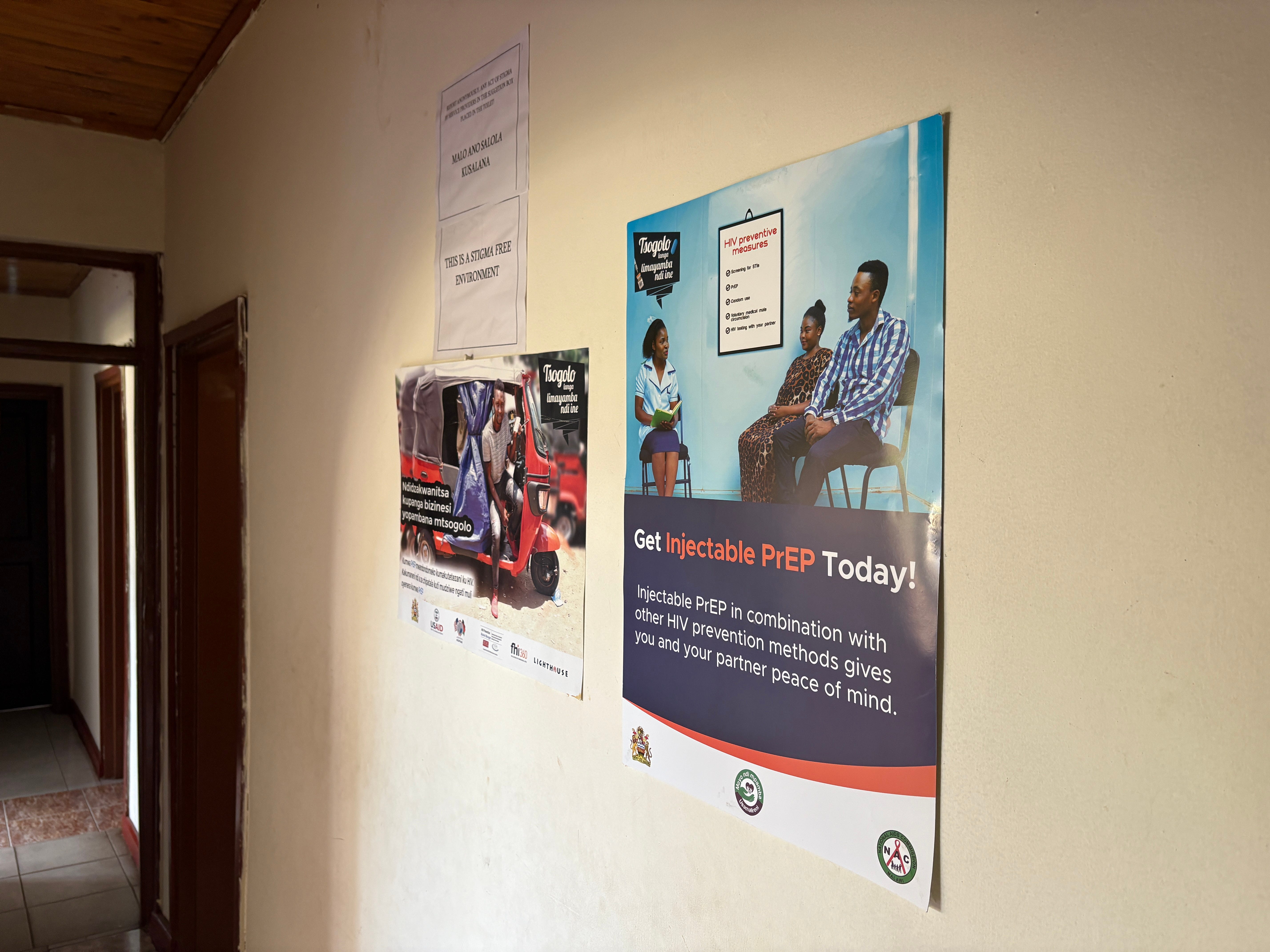
The Trump administration’s promise last week to provide two million people with a breakthrough long-acting injectable form of HIV prevention should have come as a relief to someone like Debwe Kambala*.
The 39-year-old Malawian struggles to maintain his current prevention method, which requires a costly visit to the clinic every other month. With the new injectable, known as lenacapavir, he would only need to make two visits per year.
Except Kambala is bisexual. And administration officials want to prevent him and other queer men, transgender women and sex workers—the communities that would benefit most from lenacapavir—from accessing any of the injectables that Washington pays for.
Kambala, a slight, jocular man with a broad smile and the wisp of a goatee, currently uses the injectable HIV prevention medicine known as CAB-LA. The 39-year-old gained access to CAB-LA through a health clinic for gay men and transgender women. It’s run by the Centre for the Development of People, or CEDEP, from a retrofitted house on the outskirts of Blantyre in southern Malawi.
It is the only clinic where Kambala feels safe seeking health services.
“We can’t go to other health centers because we receive a lot of challenges there. Torture, pointing, things like that,” he explains.
Working with Malawi’s government, Georgetown University researchers tapped the clinic to provide CAB-LA to a handful of clients. They are part of a broader study to figure out how best to eventually make this form of pre-exposure prophylaxis, or PrEP, more widely available across Malawi.
Kambala has been a diligent participant, showing up every two months for his injection of CAB-LA. It comes at significant expense to him, though. The hour-long trip to the clinic costs him more than $6—nearly all of the small stipend he receives each month doing activities to promote vaccinations and other health services in his community.
“We feel it’s very tough to come here and get the injectable,” Kambala says. “Some of us, we manage because we know the importance.”
He would be an excellent candidate for the six-month injectable lenacapavir. It should have been good news, then, when the State Department announced plans to help pay for up to two million people to access lenacapavir through 2028.
After months of slashing funding for HIV services, the decision was something of a surprise. Particularly coming from an administration that has characterized previous U.S. support for global HIV services as fostering dependency.
However, State Department officials are framing the investment in lenacapavir as an opportunity to champion American innovation, since the U.S.-based Gilead developed the medicine. A spokesperson touted the deal as catalyzing “greater global and private sector investment in access to this groundbreaking medication,” apparently in the form of additional support from the Global Fund to Fight AIDS, Tuberculosis and Malaria and at-cost pricing from Gilead.
What the spokesperson failed to mention is that officials already announced the outline of this plan, including the Global Fund partnership, back in December when Joe Biden was still president. And never mind that even then activists criticized it for being not nearly ambitious enough.
Indeed, researchers say to take best advantage of this innovation, at least 20 million people should be on lenacapavir as soon as possible.
What does seem to have changed between the December announcement and now, though, is who will get the lenacapavir. The Trump administration plans to issue a strong recommendation that the injectable be made available only to pregnant and breastfeeding women to help prevent them from transmitting HIV to their newborns.
The administration wants to exclude the communities at highest risk of infection—gay men, transgender women, sex workers. It does not even want to provide lenacapavir to organizations that might work with those groups or to any non-governmental organizations. Officials have characterized them as “beltway bandits,” taking resources away from government health systems.
These are the same organizations, though, that have ties to vulnerable communities. They run the clinics where people like Kambala feel safe accessing services. They are also the organizations that have already been disproportionately impacted by the Trump administration’s cuts to U.S. support for global HIV programs.
In Malawi, CEDEP was among the groups that took a big hit, losing a $7.7 million program that was supposed to run through September 2026. As a result, the organization had to close two of the four drop-in centers it operates.
CEDEP was only able to keep open the clinic that Kambala uses by drawing on other resources. And he can still get CAB-LA, because it is not dependent on support from the U.S. government.
But the Trump administration wants to make sure it does nothing to help Kambala—who has done everything possible to demonstrate that he would be a model client—or anyone else that CEDEP works with get access to lenacapavir.
*Debwe Kambala is a pseudonym.
Recommended Reading
Even as the administration pledges to provide lenacapavir, it is withholding millions in global HIV funds Congress already appropriated by Congress. Those funds will expire if they are not spent by the end of this month, The Guardian explains.
Physicians for Human Rights documents the impact of the U.S. HIV funding cuts on people in Uganda and Tanzania, finding babies born with HIV and mothers who have lost access to medicine.